The problem
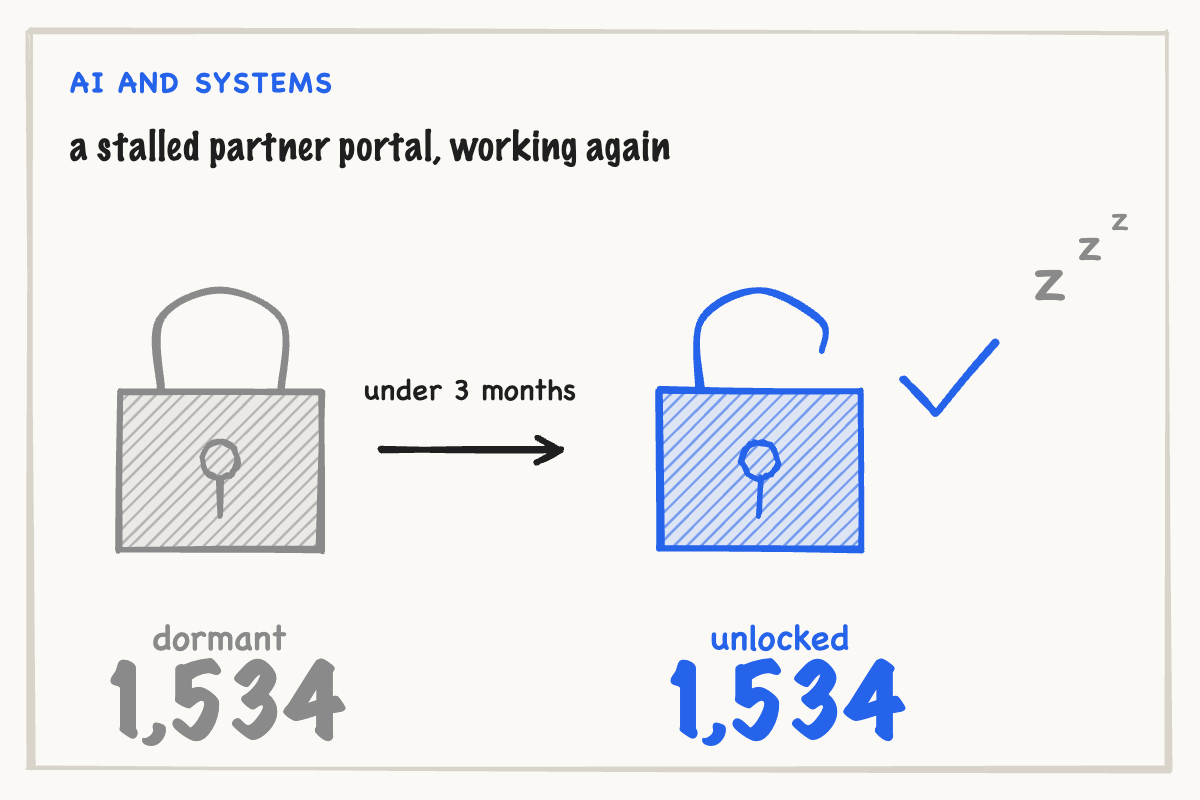
The partner portal tracks accounts, deals, and tasks. When I took over, deploys had been failing for three weeks. Most accounts were hidden from users. Partners could not see their own pipeline. Internal teams could not trust the data. Every release attempt made the backlog worse. Shipping was how the pile grew.
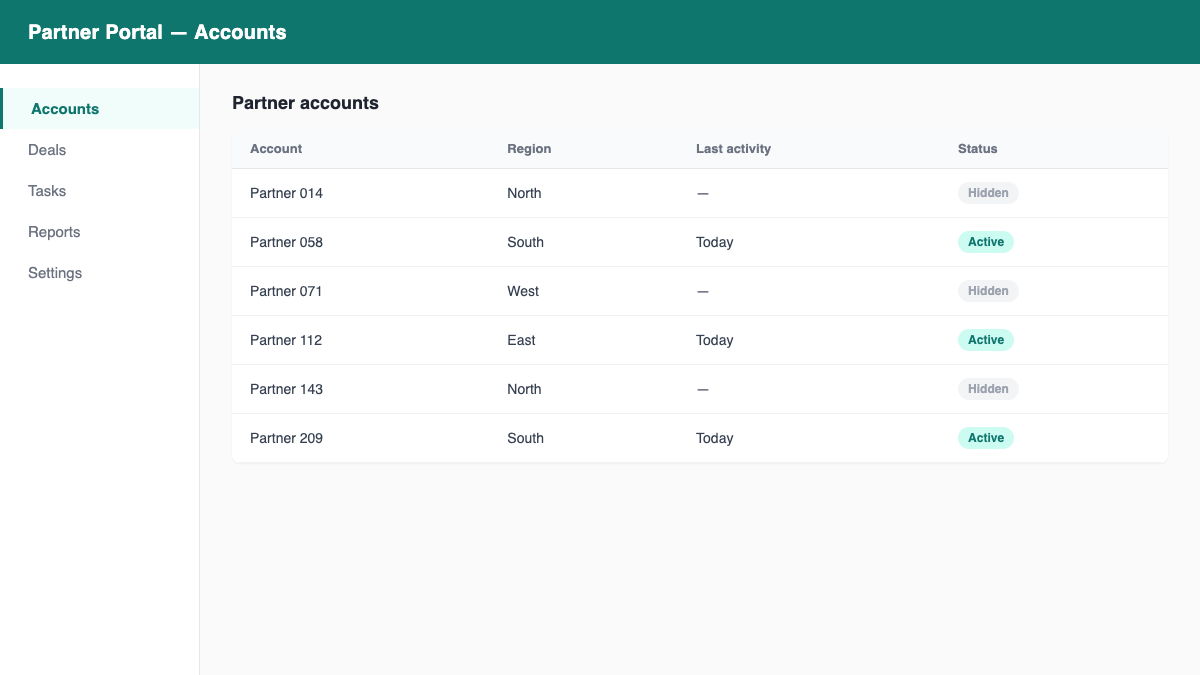
Illustrative mockup.
What I did
I took production ownership in four days. First move was a cutover to a stable release, before anything else. A broken system with no owner is worse than a slow one with a plan.
Then I set a process. A single fix would not hold.
- Every change was a numbered change request. Nothing shipped without a record of what it touched, and why.
- A separate check tried to disprove each change before it went out. We did not trust the person who wrote it.
- I added an AI assistant and an MCP server. Agents could read and update portal records without a manual lookup.
- The stabilization pass found 2 critical security defects, and 3 more.
- I left a full written handover. The next owner would not start from the same blind spot.
Order mattered. Stability, then process, then new capability. I did not add the AI assistant until the release pipeline was predictable enough to trust.
The result
1,534 hidden partner accounts became visible and usable again. The team shipped 25 releases in the peak stabilization week. Before that, the pipeline had not shipped cleanly in three weeks. Partners could see their own deals and tasks. Internal teams had a system of record they could trust.
The account count was the visible part. The shift was the process. A portal that broke on every deploy now runs on a change request and an independent check. That is why the pace could rise once the backlog cleared.
What I'd do differently
I would ask for read access to the deploy logs on day one, not day four. I lost the first days reconstructing what had already failed. A clean log history would have shortened that.
I would also write the change request template before the crisis. Building it under pressure made the first versions rougher than they needed to be. I revised the template twice in the first two weeks.
Part of: GTM Ops
This is part of how I work as an AI native product marketer.
Questions people ask
What are the key facts?
- Deploys had been failing for three weeks and most accounts were hidden from users
- Every change became a numbered change request, and a separate check tried to disprove each change before it went out
- Order mattered: stability, then process, then new capability
What did you fix in the partner portal?
Deploys had been failing for three weeks and most accounts were hidden from users. I took production ownership in four days and cut over to a stable release. 1,534 hidden partner accounts became visible and usable again.
How did you stop the deploys from breaking?
Every change became a numbered change request, and a separate check tried to disprove each change before it went out. The team shipped 25 releases in the peak stabilization week.
Why was the AI assistant added late?
Order mattered: stability, then process, then new capability. I added the AI assistant and the MCP server only once the release pipeline was predictable enough to trust.
What were the results?
| Measure | Result |
|---|---|
| Hidden partner accounts made visible | 1,534 |
| Failing deploys before | 3 weeks |
| Time to production ownership | 4 days |
| Releases in the peak week | 25 |