The problem
Facts about Bynry lived in too many places. Old decks. Scattered documents. Half updated notes. They drifted out of sync. Nobody could point to one place with the current truth.
Every new task started from zero. There was no shared starting point a draft could trust. That was the whole problem.
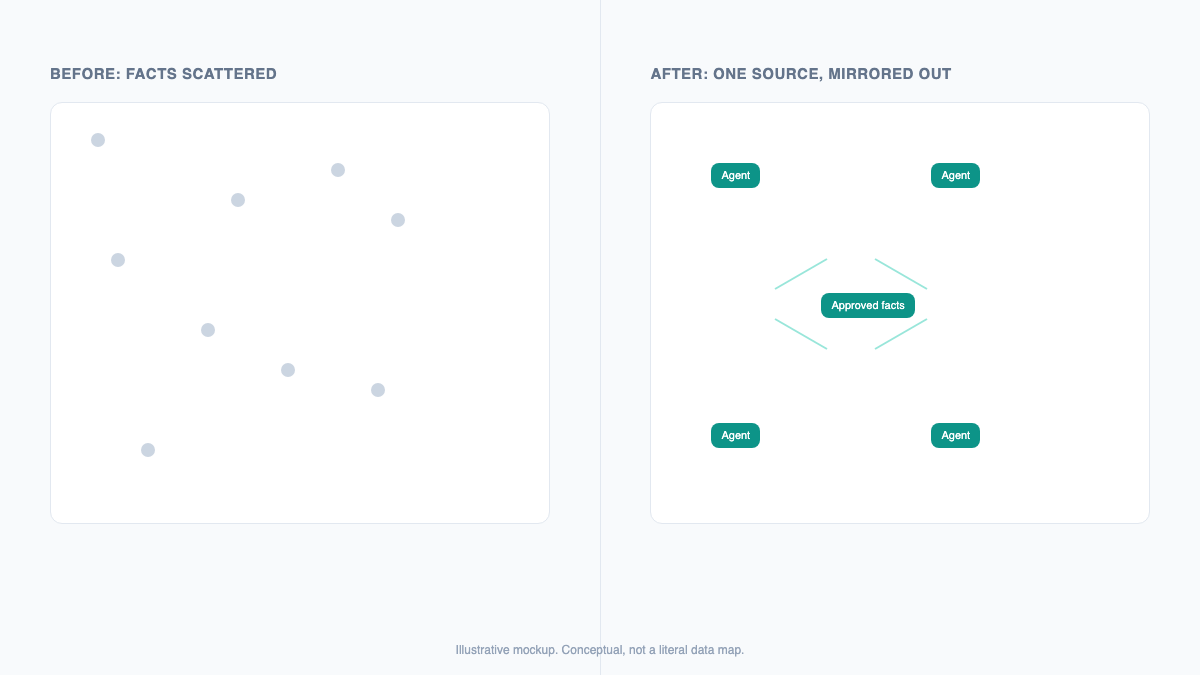
Illustrative mockup.
What I did
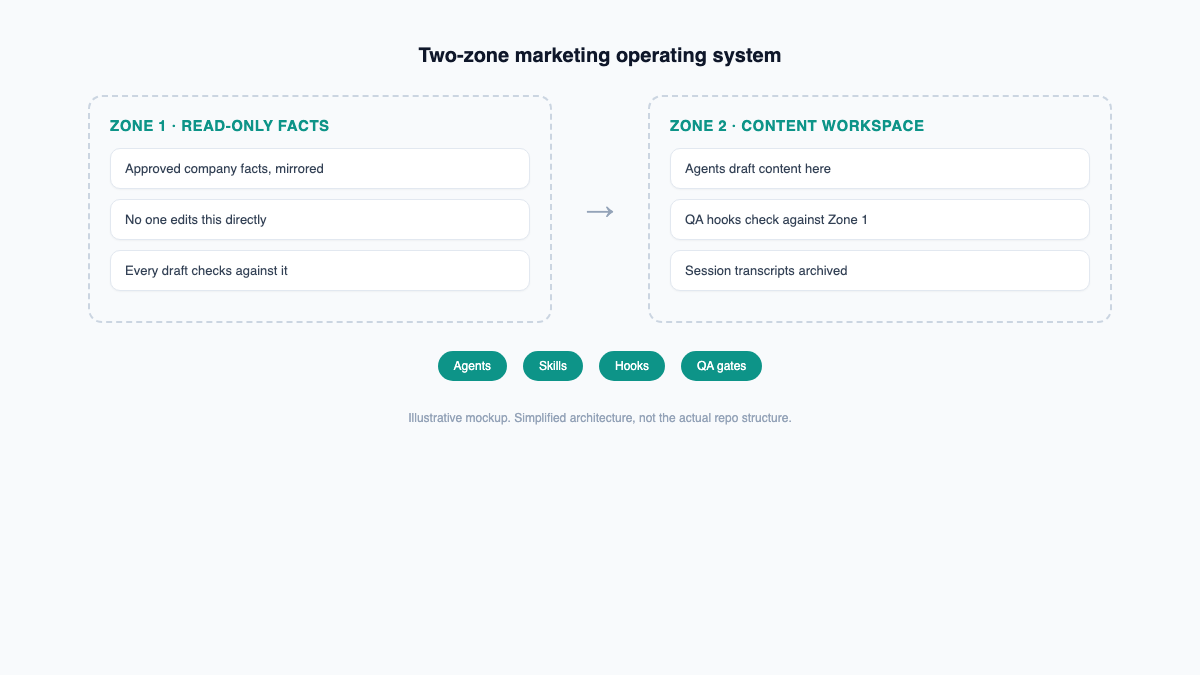
I built a repository with two zones. One held a mirror of approved facts. Nobody edited it directly. Every draft had to check against it.
The other zone was my content workspace. Drafts got written there, then checked.
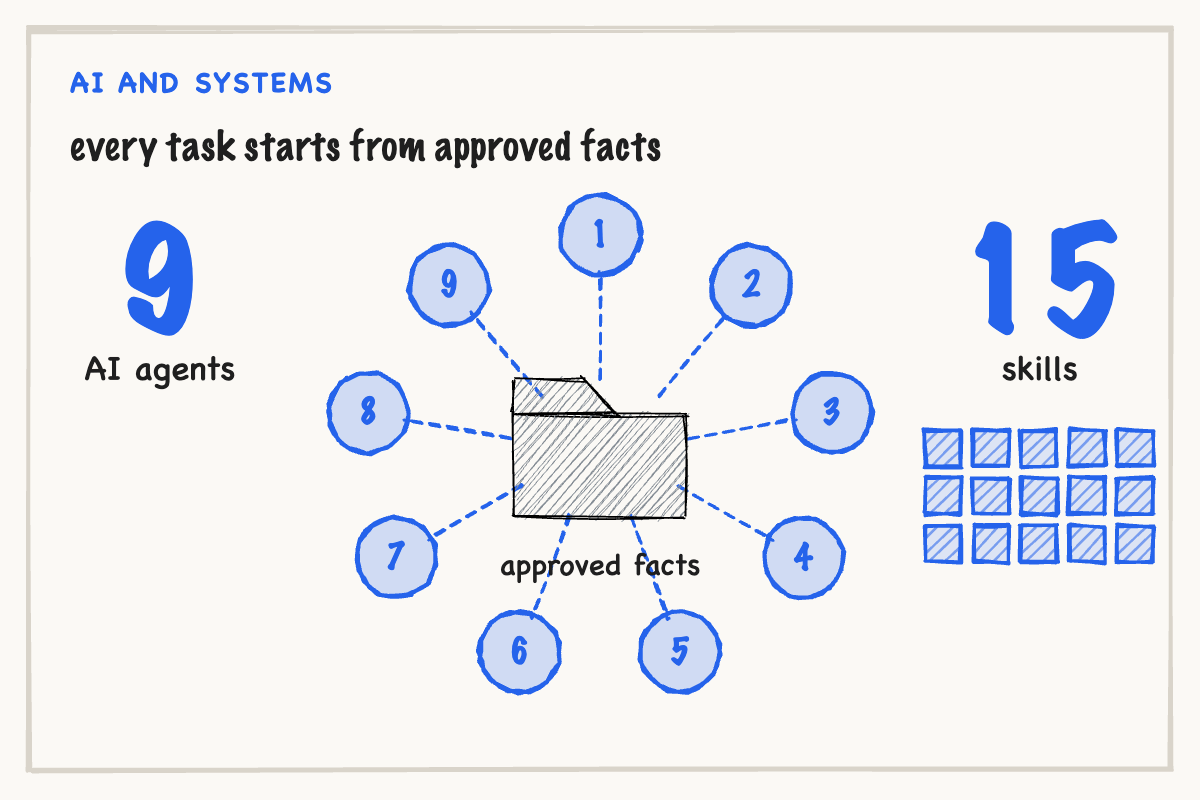
On top of that I built 9 agents, 15 skills and 9 hooks. They handled drafting, quality checks and fact verification. Every piece of content passed the same checks.
I archived 1,355 AI session transcripts. The work could be reviewed and reused, not lost after one task. I also ran 4 sessions where 17 to 18 agents worked together on one piece of work.
The result
7,100 canonical files stayed mirrored and in sync. The QA gates caught a 17% hallucination rate in agent output before it reached anyone. The point was not speed. The point was catching what agents get wrong before it ships.
What I'd do differently
I built the QA gates alongside the content system, not ahead of it. A 17% hallucination rate caught at the gate is a good result for the gate. It also means early agents produced work that needed catching.
I would stand up the fact checking layer first. Then no agent drafts before the checks exist.
I would also archive transcripts for review from day one. 1,355 transcripts is a lot of raw material. The archive existed before my plan for using it.
Part of: GTM Ops
This is part of how I work as an AI native product marketer.
Questions people ask
What are the key facts?
- It is a repository with two zones: a mirror of approved facts that nobody edits directly, and a content workspace where drafts are written and then checked against those facts
- Every piece of content passes the same QA gates
- 7,100 canonical files stayed mirrored and in sync
What is an AI first operating system for marketing?
It is a repository with two zones: a mirror of approved facts that nobody edits directly, and a content workspace where drafts are written and then checked against those facts. On top of it sit 9 agents, 15 skills and 9 hooks.
How do you catch AI errors before they ship?
Every piece of content passes the same QA gates. They caught a 17% hallucination rate in agent output before it reached anyone.
How big is the system?
7,100 canonical files stayed mirrored and in sync. I archived 1,355 AI session transcripts and ran 4 sessions where 17 to 18 agents worked together on one piece of work.
What were the results?
| Measure | Result |
|---|---|
| Canonical files kept in sync | 7,100 |
| Agents, skills and hooks | 9, 15 and 9 |
| Hallucination rate caught before shipping | 17% |
| Session transcripts archived | 1,355 |