The problem
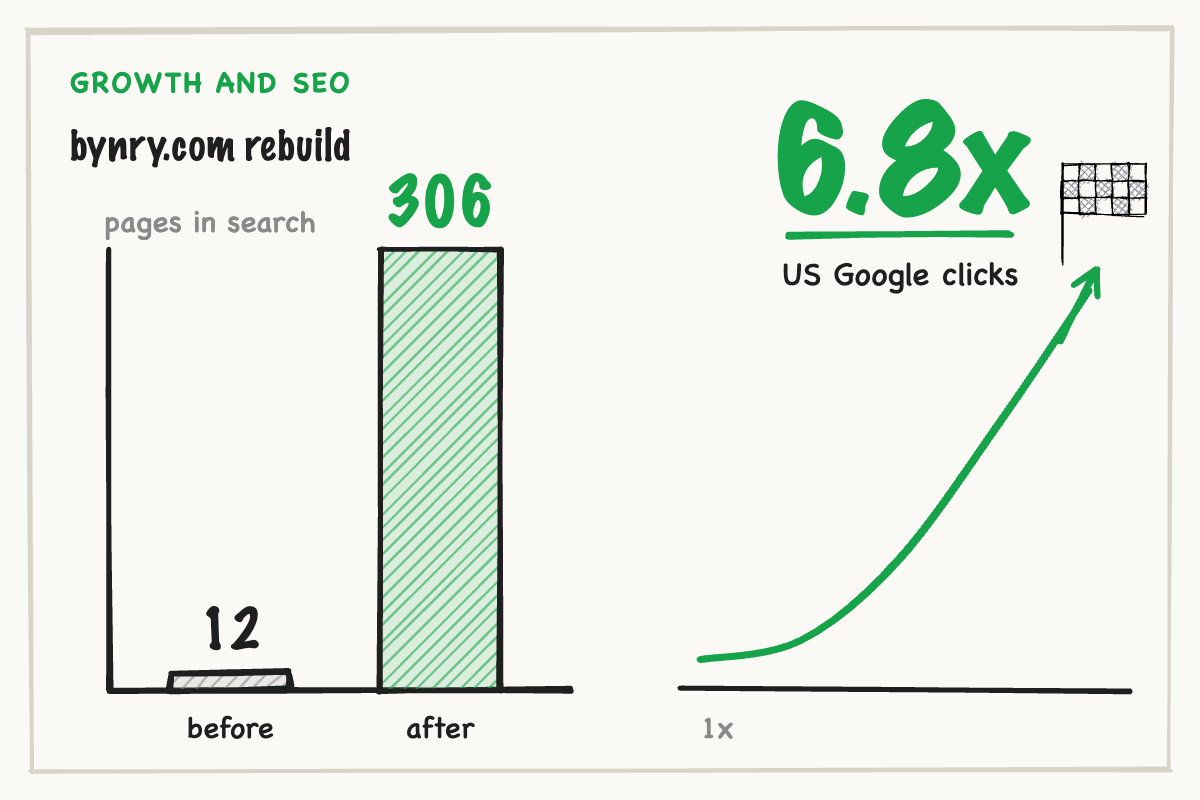
The old Webflow site had 62 pages. Only 12 showed up in its own sitemap. An audit found 31 separate issues. The site had no custom domain. Almost every search click came from people typing "bynry". Search worked if you already knew the name. Almost no one else could find it.
Illustrative mockup.
What I did
I wrote the PRD, and a 25 section website and SEO rulebook, before any page was touched. We shipped 12 core pages in a single day. With them: a custom domain, GA4, redirects, and a chatbot.
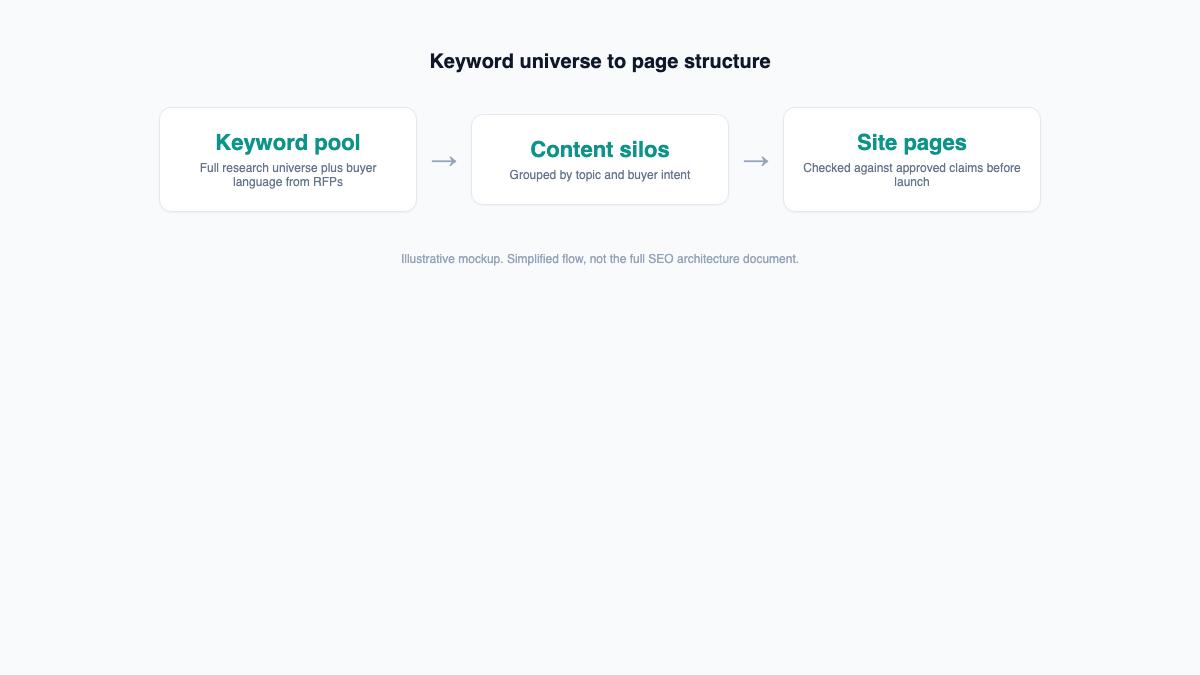
For structure, I built 14 content silos from a keyword universe of 7,374 terms. I mined 126 RFP folders for the words prospects use in procurement documents. Not the words we assumed they would search. Before launch I audited 222 pages against our approved claims. Nothing shipped that we could not back up.
Illustrative mockup.
The result
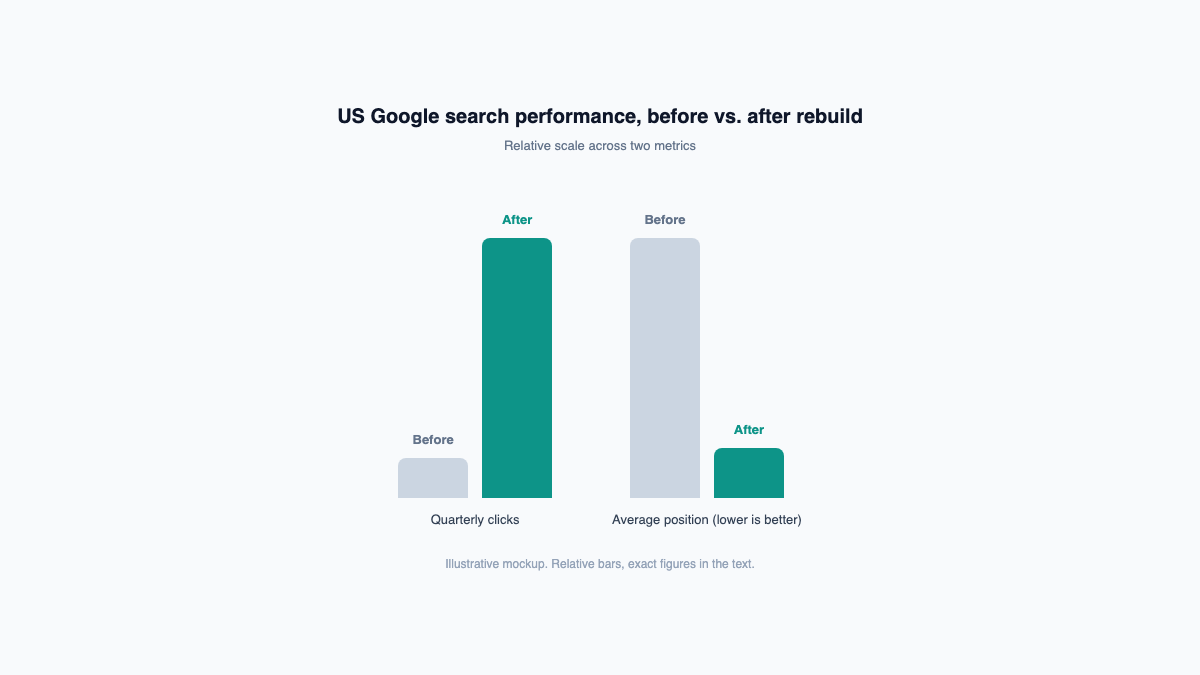
US Google clicks grew 6.8x. From 139 to 942 a quarter. Average position moved from 39.3 to 8.6. 1,651 keywords landed in Google's top 10. The sitemap held 306 URLs. Search had been a handful of pages that ranked for our name. It became a structure that shows up for terms buyers search.
What I'd do differently
Lead tracking had a gap before the rebuild. Webform submissions only started reaching Gmail reliably partway through the year. The "before" picture of inbound was an incomplete baseline. I would fix the tracking first, and agree one source of truth for lead counts, before touching the site. Then day one numbers could measure the whole relaunch.
I would separate SEO gains from other causes sooner. That same period also brought new content, backlink work, and other changes. I can show what the rebuild shipped. I can show what the rankings did after. I would set up a cleaner read from week one. Then we could say how much of the change came from the rebuild.
I would publish the RFP language research as a living document. The 126 folders shaped the silos at launch. Procurement language shifts as buyers and RFP templates change. A rebuild is one pass. The language work has to keep going after the pages ship, or the silos drift from how buyers search.
Part of: Growth
This is part of how I work as an AI native product marketer.
Questions people ask
What are the key facts?
- US Google clicks grew 6.8x, from 139 to 942 a quarter
- I built 14 content silos from a keyword universe of 7,374 terms and mined 126 RFP folders for the words prospects use in procurement documents
- I would fix lead tracking first and agree one source of truth for lead counts, because webform submissions only reached Gmail reliably partway through the year
What did the bynry.com rebuild change in search?
US Google clicks grew 6.8x, from 139 to 942 a quarter. Average position moved from 39.3 to 8.6, and 1,651 keywords landed in Google's top 10.
How was the site structured for search?
I built 14 content silos from a keyword universe of 7,374 terms and mined 126 RFP folders for the words prospects use in procurement documents. Before launch I audited 222 pages against approved claims.
What would you change about the rebuild?
I would fix lead tracking first and agree one source of truth for lead counts, because webform submissions only reached Gmail reliably partway through the year. I would also separate SEO gains from other causes, such as new content and backlink work, sooner.
What were the results?
| Measure | Result |
|---|---|
| US Google clicks a quarter | 139 to 942, up 6.8x |
| Average position | 39.3 to 8.6 |
| Keywords in Google's top 10 | 1,651 |
| Keyword universe | 7,374 terms in 14 silos |
| Pages audited before launch | 222 |