Strategic Context
This case study covers the demand generation engine I built during my first stint at Bynry Corporation (September 2021 to March 2024). When I joined as an Assistant Marketing Manager, Bynry had no inbound pipeline, no content infrastructure, and no systematic approach to lead generation. The product was SMART360, an AI-enabled utility management platform covering CIS, billing, AMI, and work order management. The primary market was Indian utilities, but the company had ambitions to expand into the US market.
The demand generation challenge was compounded by the nature of the buyer. Utility procurement cycles in India are notoriously long -- often 9 months or more from first contact to signed contract. The buying committee involves technical evaluators, operations heads, and procurement officers, each with different information needs and decision criteria. In the US market, the dynamics were different but equally complex: utilities were more technology-forward but had an overwhelming number of vendors competing for their attention.
I had to build a demand generation engine that could produce qualified leads in a market where the default buyer behaviour was inertia -- sticking with whatever legacy system they already had.
The Problem
The core problem was not just "how do we get leads?" It was "how do we get the right leads to engage deeply enough that the sales team can have substantive conversations from the first call?" In utility SaaS, an MQL that does not understand the product category is worthless. The sales cycle is too long and too complex to spend early conversations educating prospects on what a modern CIS platform does.
I also faced a geographic split. The Indian market required credibility-building through government-aligned language and industry events. The US market required a completely different approach -- one built on content discovery, SEO, and digital engagement. I needed a demand generation strategy that could serve both markets with shared infrastructure but differentiated execution.
To build the right content strategy, I studied over 100 CIS and billing RFPs. Not to respond to them, but to understand the language, priorities, and evaluation criteria that utility buyers used when they were actively looking for solutions. This gave me a vocabulary and a set of pain points that informed every piece of content I created.
The Approach
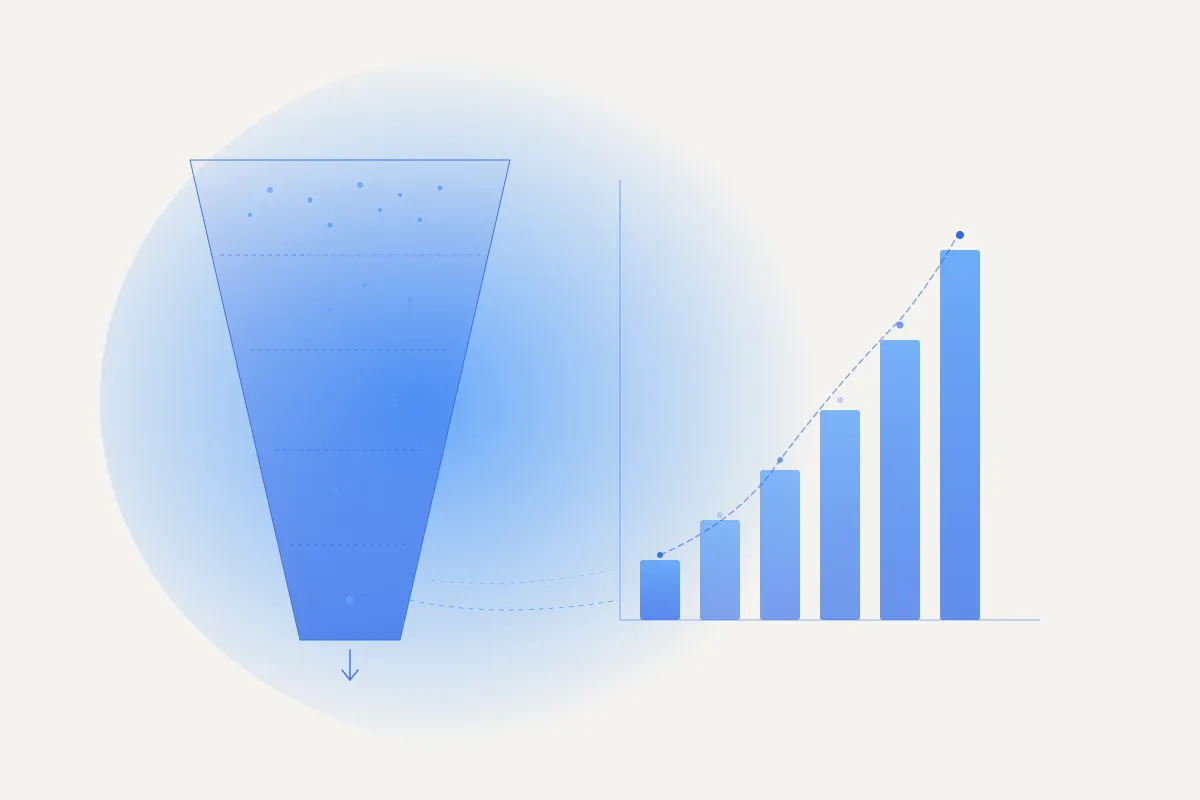
The demand generation engine was built on three layers: awareness content, consideration content, and conversion infrastructure.
Awareness layer. The top of the funnel was driven by SEO-optimised content targeting the specific problems I had identified from RFP analysis. Not "what is CIS software" -- that attracts researchers, not buyers. Instead, content like "reducing non-revenue water losses with automated meter data management" or "how to evaluate CIS platforms for Smart City compliance." These topics matched the exact language utility professionals used when searching for solutions.
For the US market, I focused heavily on SEO because the discovery behaviour was fundamentally different from India. Indian utility buyers found vendors through industry events and government recommendations. US utility buyers searched Google, attended webinars, and read industry publications. I optimised for this discovery path, and it produced the 2,000% growth in US website visitors over 8 months. That number sounds extraordinary, but the baseline was near zero -- Bynry had essentially no US web presence when I started.
Consideration layer. Mid-funnel content was designed to move prospects from "I have this problem" to "this company understands my problem better than anyone else." This included technical whitepapers, comparison guides (honest ones that acknowledged where legacy systems were stronger), and case studies from early implementations. The case studies were especially effective because Indian utility buyers are deeply influenced by proof of implementation in similar organisations.
Conversion infrastructure. The bottom of the funnel was where demand generation handed off to sales enablement. I built gated content that required enough information for qualification but not so much that it deterred downloads. The qualification criteria were based on the persona mapping I had done -- not just "is this person at a utility?" but "is this person in a role that participates in the buying committee, at an organisation that is likely to be evaluating new systems?"
The content machine was not just blog posts. I developed a multi-format approach: written content for SEO and email, visual content for LinkedIn and social, and presentation-style content for the podcast and webinar placements that the thought leadership programme was generating.
What Worked (and What Didn't)
The SEO-led content strategy for the US market was the biggest outperformer. The 2,000% traffic growth in 8 months validated the approach of targeting specific utility pain points rather than broad category terms. The traffic was not vanity -- these were visitors arriving through search queries that indicated genuine buying intent or problem awareness.
The RFP-informed content strategy was the differentiator I did not see other utility SaaS vendors doing. Most competitors published generic "digital transformation" content. My content used the exact terminology, evaluation criteria, and priority structure that appeared in real procurement documents. Prospects noticed. Multiple early leads mentioned that our content "spoke their language" -- which was literally true, because their language was the source material.
What underperformed initially was the email nurture sequence. The first version was too product-focused and had below-average open rates. I restructured it around the problem-first, solution-second principle: each email led with a specific operational challenge (billing errors, meter reading inefficiency, compliance gaps) and only introduced SMART360 as a solution after establishing the problem context. After the restructure, engagement improved significantly.
What I would do differently: I would invest in video content earlier. The utility sector skews older and more conservative, and I initially assumed written content was the primary format. But the podcast placements (covered in the thought leadership case study) showed that audio and video content resonated strongly with this audience. I should have extended that into short-form video content for LinkedIn and YouTube sooner.
Results
Over the course of approximately 9 months of the demand generation engine being fully operational, the results were: 300+ marketing qualified leads generated. US website traffic grew 2,000% in 8 months from a near-zero baseline. The sales cycle compressed from an average of 9 months to 3 months -- driven partly by demand gen quality (better-educated leads entering the pipeline) and partly by the sales enablement materials that ensured conversations were substantive from the first call.
The content library I built became a compounding asset. Blog posts written in 2022 were still generating traffic and leads in 2024. The RFP-informed keyword strategy meant the content was aligned with how buyers actually searched, not with how marketers assumed they searched. That durability is the mark of a content strategy built on genuine domain understanding rather than keyword volume metrics.
What I Learned
The most important lesson: domain immersion is not optional for B2B demand generation. The 100+ RFPs I studied were not "research" in the academic sense. They were the foundation of every content decision, every keyword target, and every messaging choice. Without that depth of understanding, I would have been guessing at what utility buyers cared about, and the content would have reflected that guesswork.
Second, the geographic split forced a valuable discipline. Having to serve both the Indian and US markets meant I could not rely on a single-channel approach. The multi-format, multi-channel infrastructure I built was more resilient and more scalable than it would have been if I had been optimising for one market alone.
Third, MQL volume matters less than MQL quality. Three hundred MQLs sounds good. What actually mattered was that these leads entered the pipeline already understanding the problem category, already aware of Bynry's positioning, and ready for a substantive conversation about fit. That is what compressed the sales cycle from 9 to 3 months -- not just more leads, but better-prepared leads.
Related Case Studies
This demand generation engine didn’t run in isolation. See how the full GTM engine was built from zero — the demand gen work was one component of a broader strategy. The content that generated these MQLs also fed directly into the sales enablement work that compressed the cycle by 67%.